Discover the Intrigue of Dioscorea elephantipes

🌿 Plant Overview
- Common Name: Elephant’s Foot Yam
- Scientific Name: Dioscorea elephantipes
- Family/Genus: Dioscoreaceae, Dioscorea
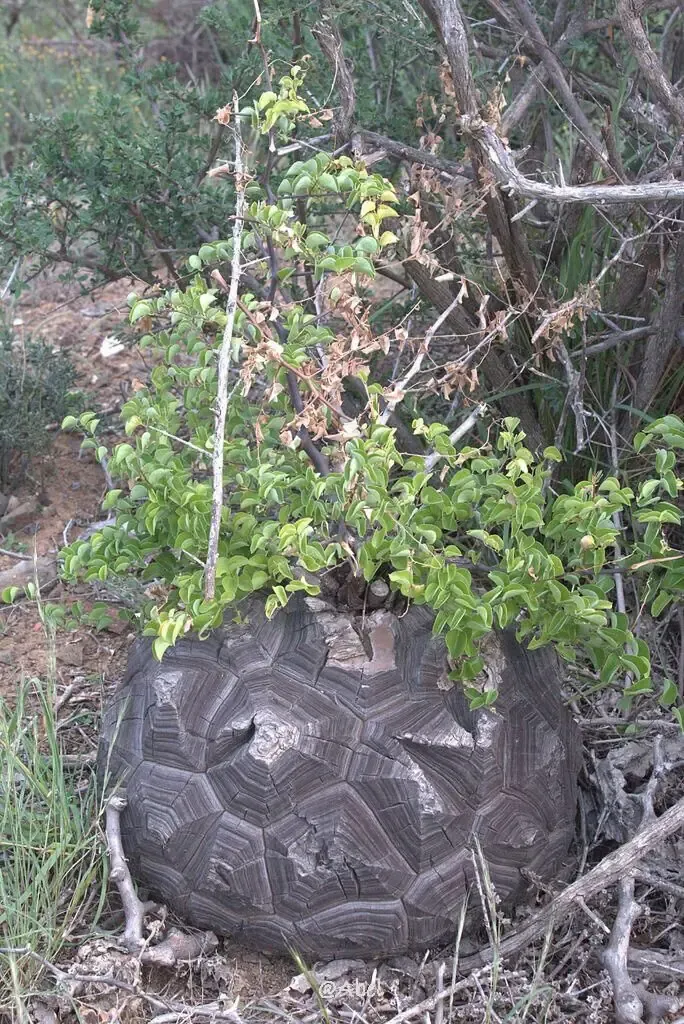
This captivating plant, Dioscorea elephantipes, often referred to as the Elephant’s Foot Yam, stands out due to its unique appearance akin to a cracked tortoise shell. It belongs to the resilient Dioscoreaceae family, known for its robustness among succulents.
🌱 Unique Appearance
The Elephant’s Foot Yam’s stem is rounded and displays a pattern reminiscent of a tortoise shell, developing deeper fissures as it matures. This characteristic makes it look ancient and wise. Once it starts to vine, it undergoes a dramatic transformation, evoking the image of a dragon lifting its head. The plant produces small, unassuming flowers and is dioecious, meaning both male and female plants are needed for fruit production.
🌟 A Tale from the Past
Long ago, a mythical being known as the Elephant’s Foot Yam was believed to inhabit vast forests, bearing a striking shell that glimmered in the sunlight. This creature was revered for its supposed healing powers and ability to bring prosperity. Villagers often paid homage to it, seeking protection and blessings. The legend tells of a catastrophic event when a mountain crumbled, endangering the village. The Elephant’s Foot Yam reportedly shielded the villagers with its shell, healing their wounds and becoming a symbol of hope and protection. This story has been passed down through generations, reminding people of resilience and the belief in a protective force during challenging times.
🌾 Cultivation Insights
Sowing and Sprouting: The propagation of Dioscorea elephantipes is primarily through seeds, planted in autumn. Maintaining a temperature of roughly 68°F can result in a high germination rate of over 80%. Before sowing, ensure the removal of the papery wings from seeds to prevent rot. Soak seeds in a mild potassium permanganate solution for several hours, then plant them in well-draining soil, covering them with a thin soil layer.
Nurturing Seedlings: Post-sowing, keep the soil moist. Germination typically occurs within two weeks. Initially, seedlings resemble small, smooth potatoes. At this early stage, distinguishing them from similar species like Dioscorea hemicrypta can be challenging.
Growth Stages:
- Early Years (1-3 years): The young plant has a smooth surface, resembling a buried potato.
- Crack Formation (4-5 years): The stem begins to develop cracks, a sign of cork formation, also known as lignification.
- Maturity (9-10 years): The characteristic cracked appearance fully develops, showcasing the plant’s elephantine features. These features become more pronounced with age.
🌸 Reflective Wisdom from Plants
In an era dominated by rapid changes and immediate results, the Elephant’s Foot Yam offers a lesson in patience and the beauty of taking life slowly, much like the unhurried pace of a tortoise.