🌿 A Closer Look at the Bog Star
Botanical Name: The Grass of Parnassus (Parnassia palustris), affectionately known as the “Bog Star”, is a charming inhabitant of the wetlands in the Northern Hemisphere. Contrary to what its name suggests, it isn’t a grass but a mesmerizing flowering plant celebrated for its allure to macro photographers.
🌼 Distinctive Features
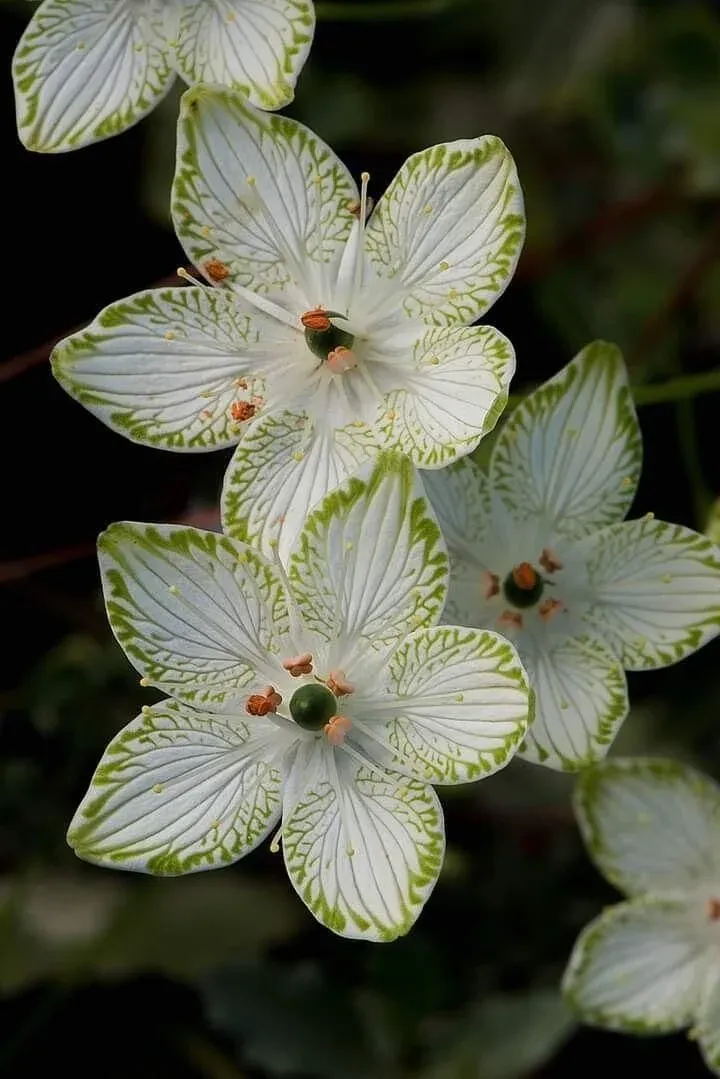
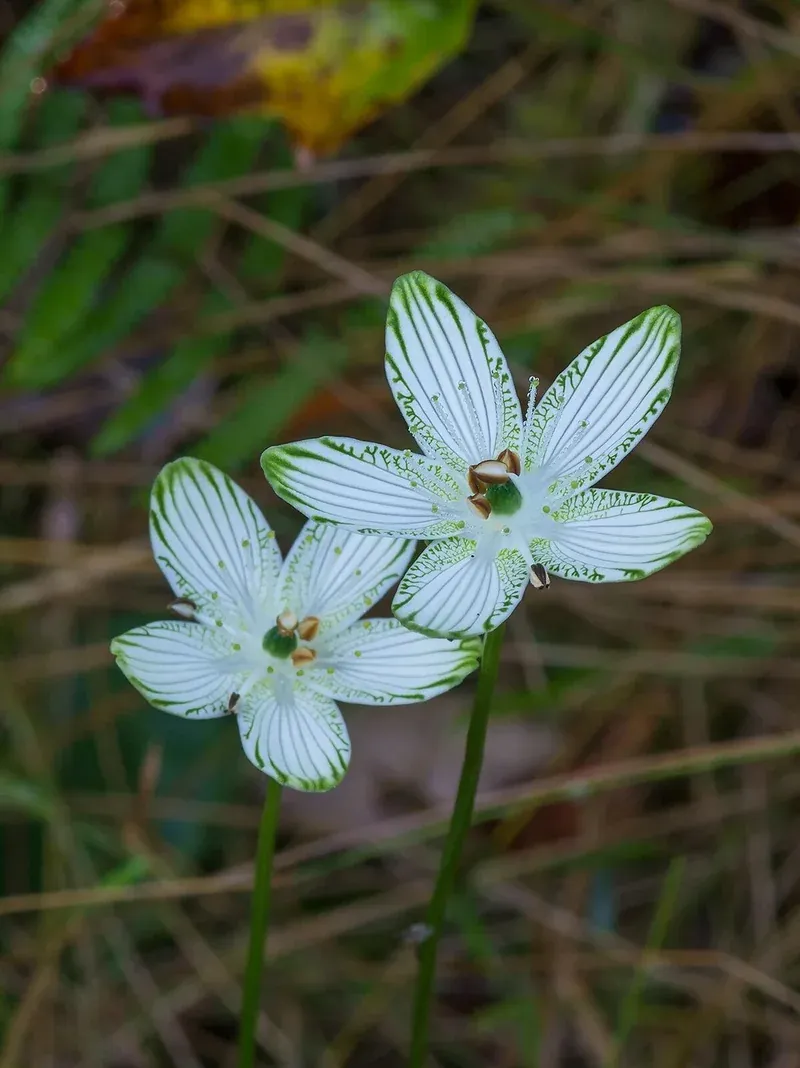
At first glance, the Bog Star appears as a solitary, exquisite white flower perched on a slender stalk. Its translucent petals are intricately lined with green veins, resembling delicate porcelain.
The real marvel, however, lies within its center. Encircling its reproductive core is a halo of fringed staminodes, which mimic stamens. Each is adorned with a shimmering, golden droplet that deceives the eye (human and insect alike) into believing they are nectar-filled treasures. These are, in fact, dry glands—an extraordinary case of visual deception, presenting a crown of “false jewels”.
🌍 The Fascinating Tale of Parnassia
The plant’s name is drawn from Mount Parnassus in Greece, a site sacred to Apollo and the Muses. Legend has it that cattle grazing on this mountain consumed the plant, bestowing it with divine connections. Evolutionarily speaking, Parnassia’s story is that of a crafty “Honey Trap.” Residing in harsh bogs with scarce pollinators, it has adapted by evolving sparkling “pseudo-nectaries” that reflect ultraviolet light. Enticed flies and bees, expecting a nectar bounty, land only to find the nectar is a ruse. Yet, in their bewilderment, they inadvertently brush against genuine anthers, thus transferring pollen to subsequent flowers. This is nature’s intricate design—using allure as a survival mechanism.
🌱 Cultivating the Bog Star
🌬️ The Start: Cold Stratification
Cultivating Parnassia tests the mettle of seasoned gardeners. The seeds need a simulated “winter” to germinate, requiring them to be sown on moist compost and subjected to cold for several weeks. Patience is essential as they will eventually sprout when spring’s light returns.
🌧️ Environment: Emulating the Moor
- Wet Soil Preference: True to its “Bog Star” moniker, this plant abhors dry conditions. It prospers in bog gardens or pots immersed in a tray of rainwater, making it a perfect candidate for a cool, open terrarium.
- Soil Type: It favors nutrient-poor, acidic to neutral soils. A combination of peat (or its substitutes) and sand suits it well. Avoid using potting mixes enriched with fertilizers.
❄️ Growth Conditions: The Cool Weather Specialist
- Temperature Needs: Being an alpine and northern species, it thrives in cooler summers and frigid winters. It struggles in hot climates, thus maintaining a cool, shaded root zone is crucial, while allowing the flower heads to bask in sunlight.
🌸 Lessons from the Bog Star
In a world bustling with noise, the Grass of Parnassus urges us to adopt the philosophy of “Closer Inspection.”
What might seem simple from afar often harbors intricate complexity up close. It stands as a testament that the most captivating narratives don’t always demand attention; sometimes, they beckon us to draw nearer and discover them for ourselves.