Leaving home for an extended period can bring a certain level of anxiety, especially when it comes to the care of your cherished indoor plants. Whether you’re embarking on a short getaway or a month-long adventure, worrying about your plants shouldn’t be on your itinerary. Thankfully, several self-watering solutions ensure your green companions stay hydrated and healthy in your absence.
🌿 Essential Tips for Leaving Your Plants
- Trial Run: Implement your watering system 3–5 days before departure to verify its effectiveness.
- Light Management: Relocate plants slightly away from bright windows to diminish water loss through evaporation.
- Humidity Boost: Cluster plants together to create a “micro-climate,” enhancing local humidity levels.
- Choose Wisely: Select a watering method that aligns with your travel length—a bottle system is ideal for short trips, while a smart pump suits extended absences.
💧 Evaluating Watering Methods
| Method | Ideal For | Duration | Effort |
|---|---|---|---|
| Wicking System | Single Pots | 5–10 Days | Low |
| Bottle Drip | Large Leafy Plants | 4–7 Days | Low |
| Self-Watering Pots | Consistent Drinkers | 7–14 Days | Medium |
| Automatic Drip Kit | Multiple Plants | 14–30 Days | High |
| “Greenhouse” Bag | Humidity Lovers | 14+ Days | Medium |
🚀 Top 5 Self-Watering Techniques
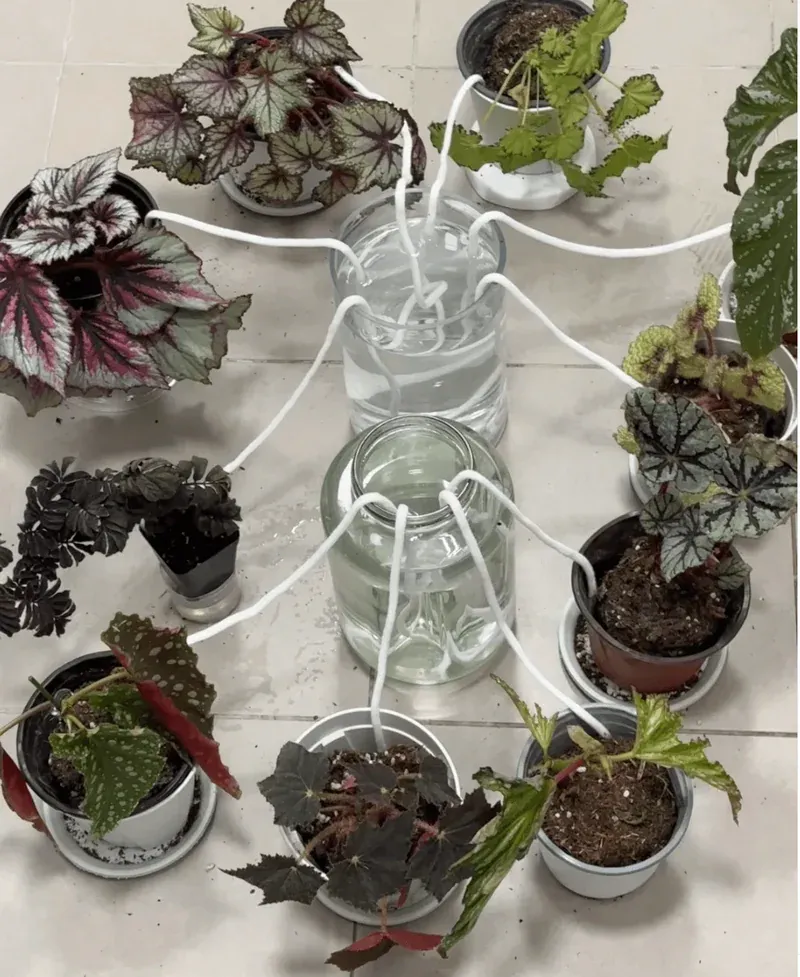
1. Wicking Systems (The “Capillary Method”)
An affordable DIY option utilizing capillary action to keep plants hydrated.
- Mechanism: Position a water-filled container above your plant. Insert a cotton rope or shoelace from the container into the soil.
- Effectiveness: As the soil dries, it draws water through the rope.
- Ideal for: Small to medium-sized plants like Pothos or African Violets.
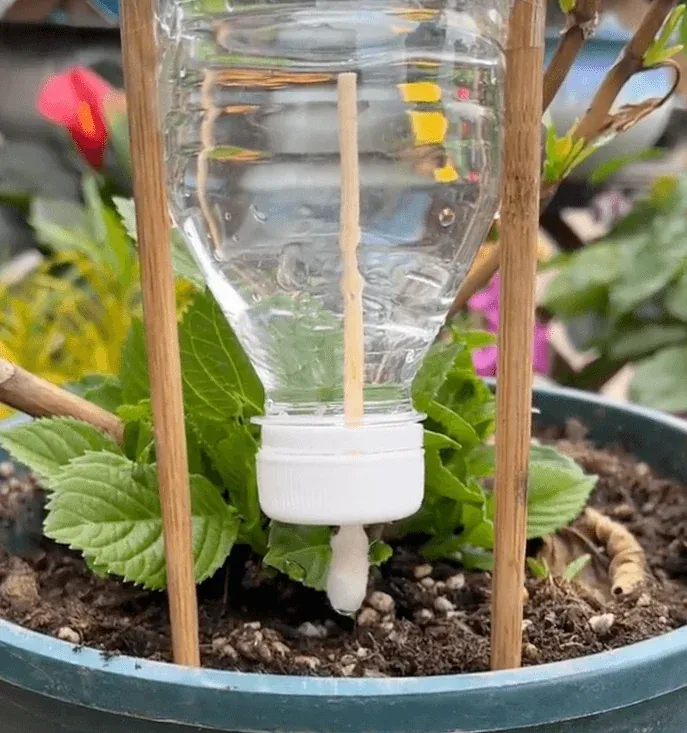
2. Inverted Bottle Method (The “Bottle Trick”)
This classic solution provides a steady water supply.
- Mechanism: Fill a bottle with water, puncture a small hole in the cap, or use a ceramic stake. Invert and embed the neck into the soil.
- Effectiveness: Gravity ensures a slow release as the soil needs it.
- Ideal for: Plants that require consistent moisture such as Tomatoes or Peace Lilies.
3. Self-Watering Pots & Stakes
A more permanent investment for frequent travelers.
- Mechanism: Equipped with a bottom reservoir, these pots allow plants to draw up water as needed.
- Tip: Ceramic spikes attached to bottles offer an elegant alternative to plastic.
4. Smart Drip Kits (High-Tech Solution)
For those with extensive collections or who plan to be away for extended periods.
- Mechanism: A programmable pump, powered by battery or solar, delivers water through tubes to multiple plants.
- Ideal for: High-value or large plant collections and balconies.
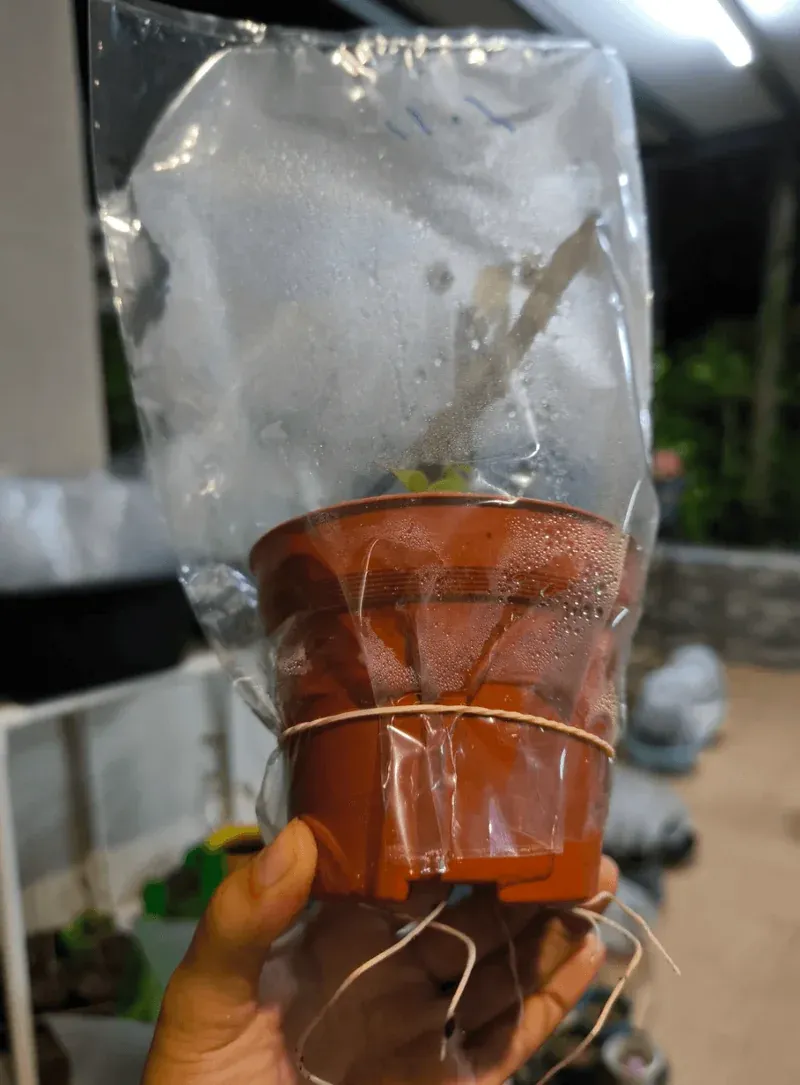
5. The “Greenhouse” Bag (Humidity Saver)
Perfect for plants that thrive in moist environments.
- Mechanism: Thoroughly water the plant, then envelop it with a clear plastic bag, inflating slightly to avoid contact with leaves.
- Effectiveness: The plant recirculates its moisture, mimicking a natural ecosystem.
🌱 Tips for a Stress-Free Departure
- Mulch the Surface: Cover the soil with pebbles or moss to significantly reduce evaporation.
- Skip the Fertilizer: Avoid fertilizing before you leave, as it promotes growth and increases water needs.
- Use the Bathtub: Place thirsty plants in a bathtub with a shallow water layer and a towel to facilitate bottom watering.
❓ Common Questions
Q: Can I submerge my plants in water while away? A: This method is only suitable for aquatic species. Regular houseplants may suffer from root rot. Use wicking or towel methods instead.
Q: Will my plants suffer if the soil dries out completely? A: Some plants, such as succulents, can endure dry conditions for weeks, whereas others like ferns require more frequent hydration. Proper grouping by water needs is essential.
Q: Should I close my curtains during my absence? A: It’s not advisable to close them completely. Plants require light to utilize water effectively. Opt for sheer curtains that allow filtered light.